5 Typical Mistakes When Developing a Nail Cosmetics Brand

These 5 mistakes hold many nail cosmetics brands back — from an unclear target audience to regulatory planning that starts too late. Here is how professional brand development succeeds.

Many new nail cosmetics brands launch with a lot of energy, a clear visual vision, and strong enthusiasm for colors, trends, and product ideas. All of that matters — but in practice, it is not enough on its own. Between a good idea and a market-ready brand lies a long series of decisions that shape positioning, quality, assortment logic, and future sales potential.

That is why the most common problems do not usually begin in production, but much earlier: when target audience, brand profile, product logic, and the development process are not properly aligned. Recognizing these typical mistakes early on saves time, prevents costly revisions, and lays the foundation for an assortment that not only looks good but also works strategically.

Mistake 1:

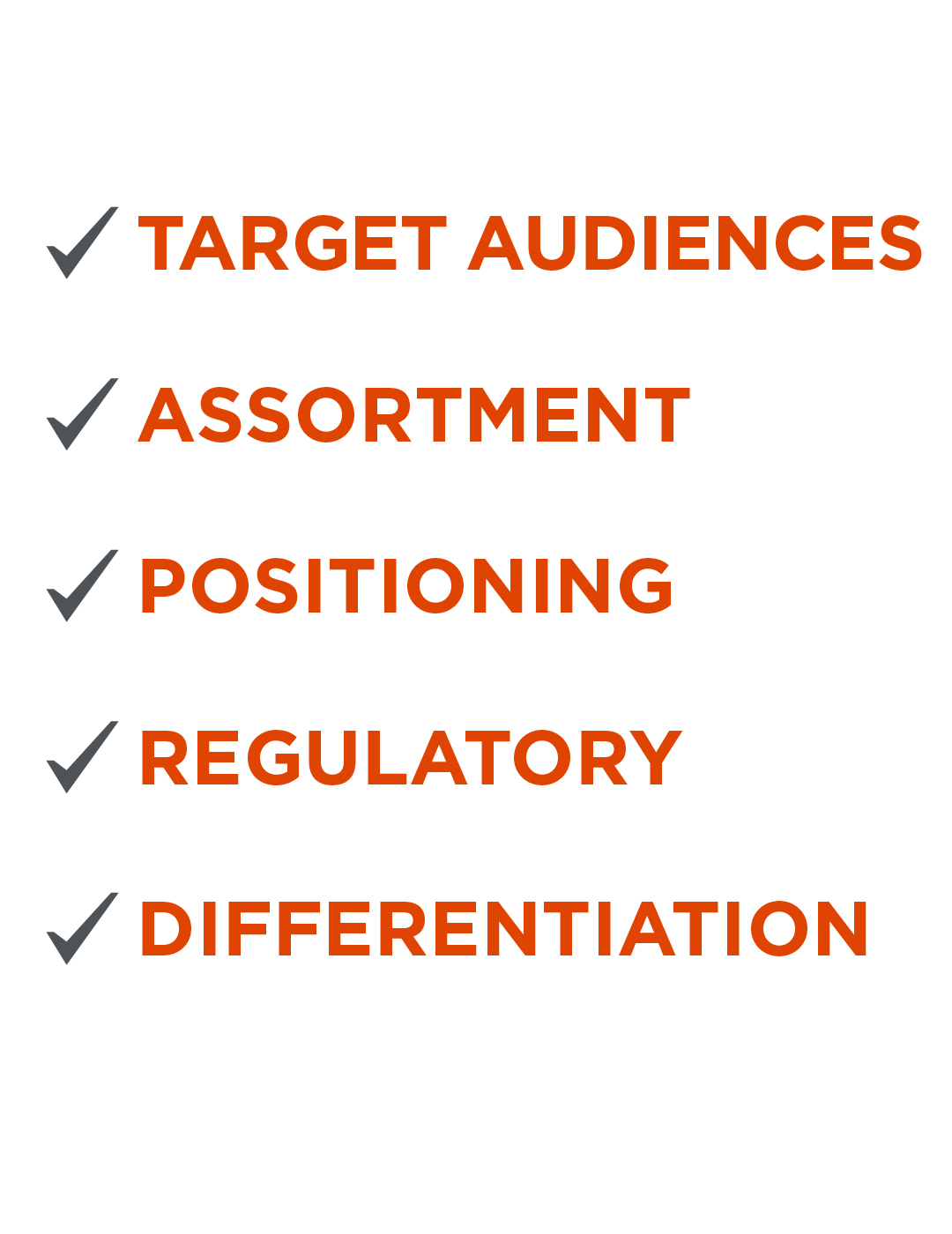
The target audience remains too vague

One of the most common mistakes in brand building is defining the target audience too broadly or too vaguely. Many concepts begin with terms such as “modern,” “high-quality,” or “trend-conscious” — without truly defining who the assortment is intended for, in what context it will be used, and what purchasing motivation lies behind it.

But this is exactly where real brand work begins. A nail cosmetics brand needs a clear understanding of whether it should be positioned as professional, salon-oriented, retail-ready, social-media-driven, price-accessible, or consciously premium. This decision later influences almost everything: formulation, the selection of color references, packaging, price points, visual language, content, and future sales arguments.

Without this clarity, an assortment quickly emerges that tries to be many things at once, but ultimately delivers real added value to no one. Externally, this may look like variety — internally, however, it leads to unclear briefings, inconsistent decisions, and a brand that is not perceived in the market as distinctive enough.

Mistake 2:

Too many products are planned for the launch

Many new brands want to start as comprehensively as possible: with several product categories, many colors, additional products, and the broadest possible selection. From a marketing perspective, that may seem attractive at first glance. In development, however, this is often exactly the point where complexity, coordination effort, and the risk of errors increase unnecessarily.

A good launch assortment does not need to be large — it needs to be clear. Instead of an overloaded product portfolio without clear USPs, a curated start with a few consciously defined products is far more promising. Building too many variants too early not only increases the workload in development, sampling, approval, and communication, but also makes later marketing more difficult. An assortment does not sell better simply because it is larger — it sells better because it is understandable.

This focus is especially valuable in a private label context. When the first assortment already clearly shows what the brand stands for, which colors are the key ones, and what roles the products play, it creates a much stronger foundation for later expansion. Growth usually works better when it is built from a clear core logic rather than from an overly broad start.

Mistake 3:

Colors are developed first — and market positioning only afterwards

In the nail sector, color is emotional, visible, and often the first creative impulse. That is precisely why, in many projects, it becomes the starting point too early. The problem is that a beautiful color assortment is not a substitute for a brand strategy.

Strong colors alone do not make a strong brand. Only once it is clear which target audience is being addressed, what price and quality level should be achieved, and what role the assortment should play in the market, can it be assessed which colors actually make sense. Otherwise, collections often emerge that may look attractive individually, but fail to build a consistent assortment logic.

In practice, this often becomes visible when too many similar shades are selected, essentials are missing, or seasonal impulses do not fit with the rest of the line. Successful brands, by contrast, work with clear structures: defined core shades, targeted hero products, and meaningful seasonal additions. In this way, color creates not only attention, but also orientation — and that orientation is essential for both sales and recognizability.

Mistake 4:

Quality assurance and regulatory planning are addressed too late

Many brands still treat regulatory requirements as if they were a final checkpoint before launch. In the EU market, that is too short-sighted. Clear rules apply to cosmetic products: among other things, there must be a responsible person in the EU, a safety assessment including a Cosmetic Product Safety Report, a Product Information File, CPNP notification, and the required labeling. These are not end-stage tasks — they need to be built into the development process from the very beginning.

Product claims should also be formulated and reviewed sooner rather than later. In the EU, cosmetic claims must be useful, understandable, and reliable, and they must be supported by adequate and verifiable evidence. So if a brand starts early with statements such as “particularly gentle,” “long-lasting,” “professional,” or “innovative,” it should also think in parallel about which of these statements can later be communicated in a substantiated way.

In the nail segment, there is an additional layer: the regulatory classification must be carefully assessed case by case. The European Commission itself points out that borderline cases for cosmetic products are evaluated individually. This is especially relevant for nail care products as soon as formulations, functions, or claims move into areas that are no longer clearly cosmetic.

Recent developments around TPO in nail products also show how costly delayed regulatory thinking can become. With Regulation (EU) 2025/877, the European Commission prohibited, among other things, the use of TPO in cosmetic products from September 1, 2025 onward. For some brands, this ban had far-reaching consequences. Anyone who fails to take regulatory developments into account early enough risks unnecessary rush in reformulation, out-of-stock situations, delays, and avoidable costs.

Mistake 5:

There is no clear point of differentiation

Many new brands look appealing, but in terms of content they communicate almost the same things: high-quality products, beautiful colors, good performance, modern design. The problem is not that these points are wrong. The problem is that they are rarely enough to make a brand truly distinctive in a competitive market.

A strong nail cosmetics brand therefore needs a clear differentiating promise. It does not have to be loud or spectacular — but it does have to be clear. That can be achieved through target audience focus, a specific application benefit, assortment logic, quality standards, brand attitude, or curated color worlds. What matters is that it becomes immediately understandable from the outside why this brand exists and what makes it relevant.

If this profile is missing, development often turns into a collection of isolated product ideas. Then colors, products, and messages sit side by side, but no real line is created. That is why the briefing stage should already define which brand core should later be recognizable in the product, packaging, content, and sales approach. Only this consistency turns a launch into a solid brand foundation.

Why these mistakes are so common

Most of these mistakes do not happen because of a lack of motivation, but because of the wrong sequence. Too much work is done too early on colors, names, designs, or product quantities — and too little on positioning, assortment logic, quality framework, and market readiness.

That is exactly why a structured development process is worthwhile. When target audience, brand idea, product roles, regulatory requirements, and future marketing are considered together from the beginning, decisions become easier, briefings more precise, and correction loops much less frequent. This not only saves time, but almost always improves the quality of the final assortment as well.

Share: