From Product Idea to Market Readiness: An Overview of the Development Process

There are far more steps between the initial product idea and a market-ready nail product than many people expect at first. Not because development has to be unnecessarily complicated, but because every single step on the journey from the first concept to a commercially promising product needs to be carefully thought through.

That is exactly why a structured development process matters so much. It helps put decisions in the right order, simplifies alignment, and prevents unnecessary revisions later on. A well-organized development process usually does not slow things down — it moves them forward more clearly, more efficiently, and with far fewer correction loops.

The starting point is not a sample, but a clear briefing

Many projects begin with a product idea, a rough design direction, or initial color preferences. That is a good start, but it is not yet a reliable development brief. For an idea to become a marketable product, a few key fundamentals need to be clearly defined from the outset: Which target audience should the product address? In which price and quality segment should it sit? What role should it play within the assortment? And what does it actually need to deliver in everyday use?

This first step is often underestimated. In practice, it is where it becomes clear whether the development partner’s work will remain focused later on or whether constant adjustments will be needed. A strong briefing creates priorities. It defines what is essential, where flexibility exists, and which requirements are truly relevant to the market.

For POLYSTONE, this is exactly where we can add particular value as a partner: not only at product level, but already in translating a brand idea, a target audience, and an assortment objective into a concept that can actually be developed. That is often the key difference between a loose product idea and a project that is heading in the right direction from day one.
Turning a concept into a product that can actually be developed

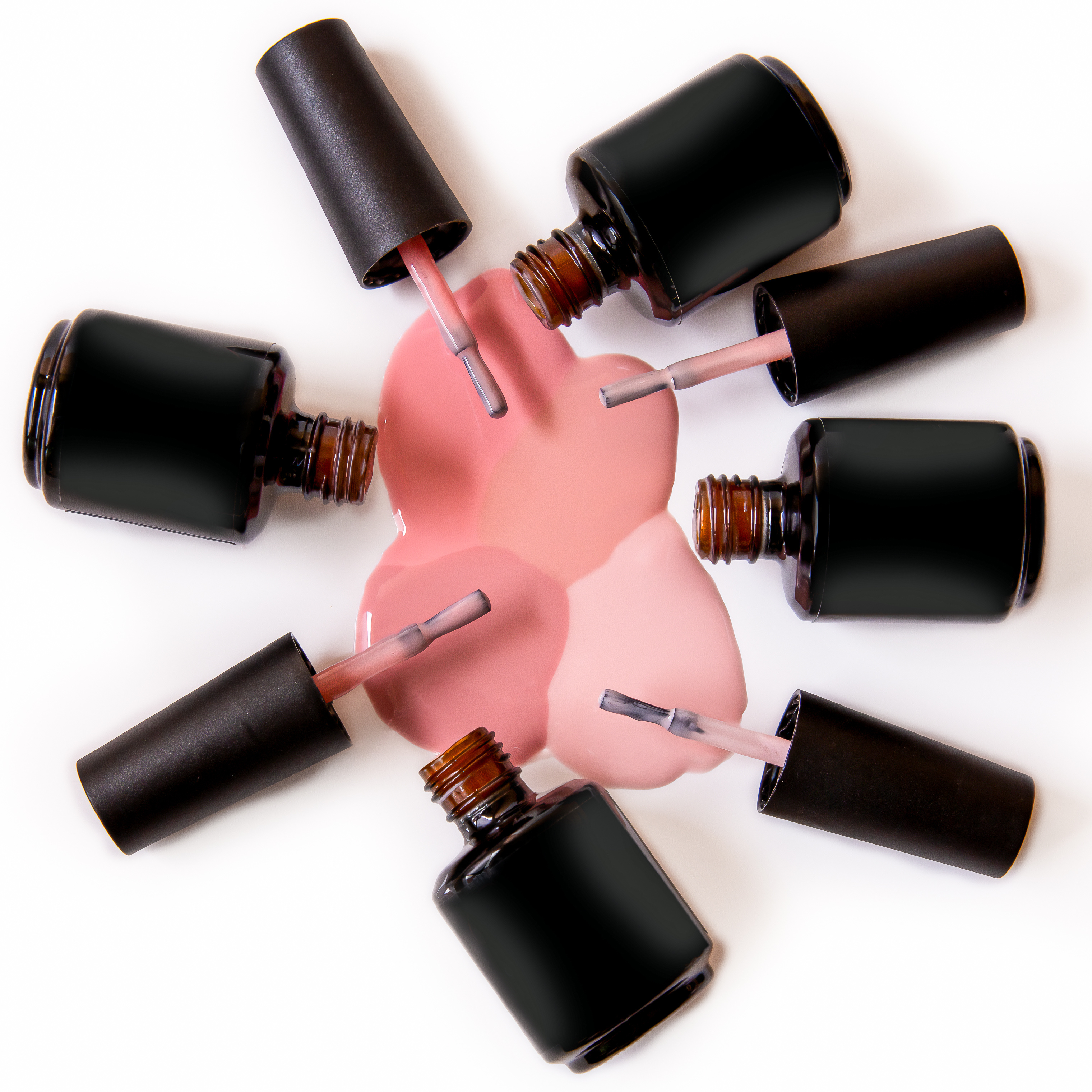
Once the framework is in place, the real concept phase begins. This is where a brand idea becomes a concrete product brief. Which texture makes sense? What kind of color world fits the planned assortment? Which products are truly needed for launch — and which ones can come later? It is in this phase that it becomes clear whether a project has been built in a structured way or whether it starts fragmenting too early into individual wishes and side ideas.

What matters most here is not to think about the product in isolation. A market-ready nail product must not only work technically — it also has to fit the assortment, the communication strategy, and the brand positioning. A beautiful standalone product does not automatically make a strong launch product. Only when function, look, usability, and brand image work together does a concept become sustainable in the long term.

This is one of the key strengths that makes POLYSTONE such a strong development partner: the combination of product development, color and trend expertise, and nearly 40 years of B2B experience. That makes it easier to identify promising ideas early on, understand which combinations make sense, and shape individual product requests into a coherent assortment.

Sampling phase: test, refine, decide

During the sampling phase, the concept becomes tangible. This is where it becomes clear how well requirements can actually be translated into a real product. That is why this phase is much more than simply deciding whether something is liked or not. It is the moment when products are refined — in texture, color effect, handling, user experience, and overall impact.

What matters here is not letting this phase become unnecessarily bloated. Many projects lose time because too many directions are tested in parallel or because decisions are repeatedly reopened. A better approach is a clear structure: test, compare, evaluate, decide. That keeps development flexible without becoming unclear.

Here, too, choosing the right development partner makes a major difference. A good partner does not just deliver samples in an appropriate timeframe, but also helps interpret them: Which version is truly right? Where is an adjustment worthwhile? And when is a product ready for the next step? Good development work is not about producing as many options as possible, but about reaching reliable decisions together — quickly and with confidence.

Packaging, labeling, and documentation need to move along in time

At the latest, once the product and the samples are approaching the final stretch, it is no longer enough to focus only on formulation and appearance. Before a cosmetic product can be placed on the market in the EU, it requires a responsible person within the EU, a safety assessment, a Product Information File, and notification via the Cosmetic Product Notification Portal (CPNP). In addition, there are mandatory labeling requirements for both packaging and container.

The Product Information File includes, among other things, the Cosmetic Product Safety Report, manufacturing information, and a declaration of compliance with Good Manufacturing Practice. For production, the European Commission refers to EN ISO 22716 as the harmonized standard for Good Manufacturing Practice under the Cosmetics Regulation. This matters during development because market readiness depends not only on the product itself, but also on whether manufacturing, control, storage, and handover are organized through clean, reliable processes.

Approval means closing decisions — not opening new workstreams

A common mistake in many projects is that the approval phase starts too late or is managed too vaguely. At that point, the product, packaging, claims, and launch materials may all be “almost finished,” but they have not yet been properly brought together. And that is exactly what ends up costing time.

A good approval phase creates commitment. This is the moment when the product decision, packaging status, labeling, documentation, and planned market appearance all need to come together in one coherent picture. The goal is not perfection in every tiny detail, but clarity: What is final? What has been approved?

Production and launch: now the process has to prove itself

Once all decisions have been made, the critical phase begins — the point at which the robustness of the production process really shows. At this stage, it is no longer just about the idea and the sampling phase, but about actual execution: production planning, final handovers, the rollout, and the all-important question of whether the right product, in the right quality, reaches the right place at the right time.

Why a structured partner makes the difference

The more complex a project becomes, the less effective simple task-by-task execution is. At that point, what is needed is a partner who does not just manufacture, but actively thinks along the way: in the briefing, in the decision-making logic, in the product structure, and in practical feasibility. In our view, that is where the real strength of strong development work lies.

POLYSTONE is especially well suited as a development partner when brands are not simply looking to source a product, but are looking for a holistic partner who brings together research and development with a strong instinct for how product assortments succeed in the market.

Share: